
Ecommerce bookkeeping USA has become increasingly complex in 2026, especially for Shopify and Amazon sellers managing high transaction volumes, multi-channel sales, and strict tax compliance.
Running an online business in the United States is exciting, but without proper bookkeeping systems, financial management can quickly become overwhelming. What once worked with spreadsheets and monthly reconciliations now creates confusion, cash-flow blind spots, and costly mistakes.
👉 Need help with ecommerce bookkeeping in the USA? Talk to an expert
In this guide, we break down why bookkeeping is so challenging for US sellers, the most common ecommerce bookkeeping problems, and how modern systems in 2026 simplify ecommerce accounting without hiring a large finance team.
Why Ecommerce Bookkeeping Is Harder Than Ever in the USA
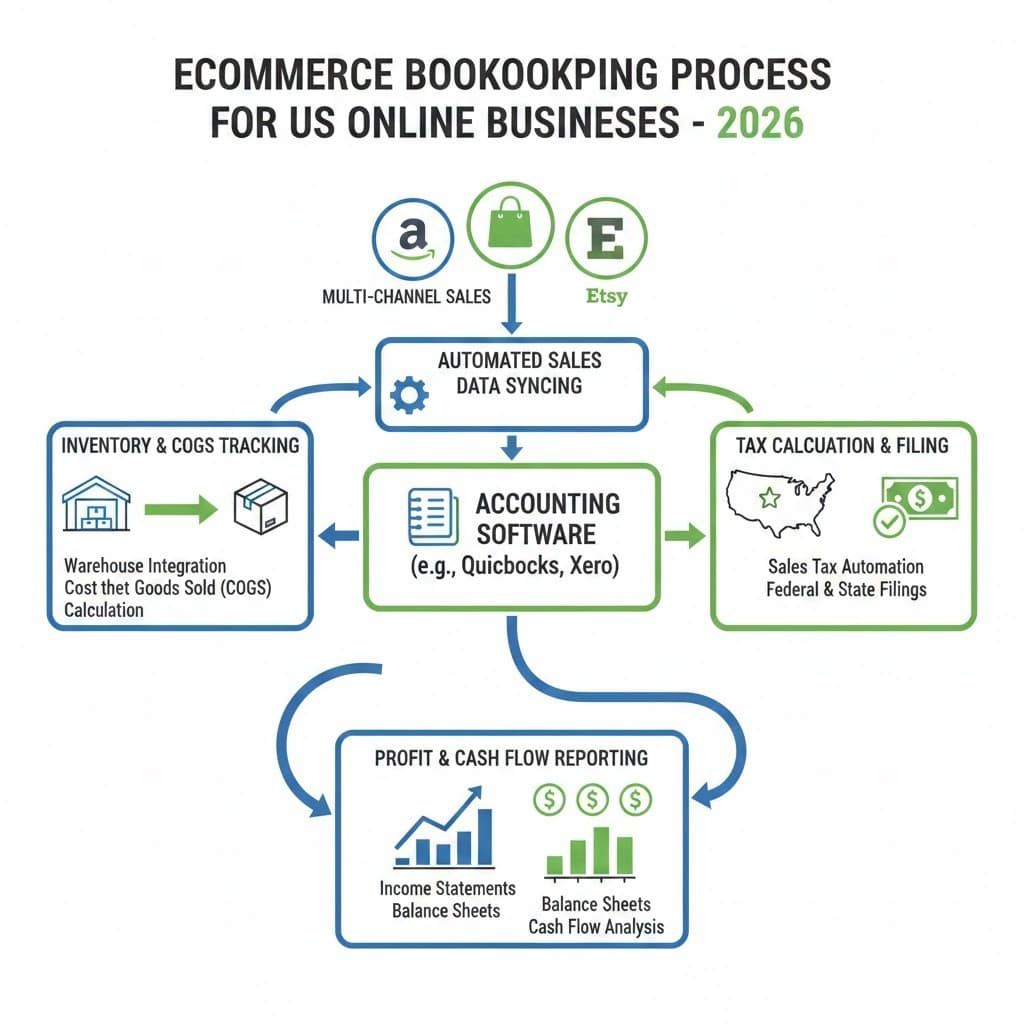
Unlike traditional businesses, ecommerce sellers don’t receive simple payments. Platforms like Amazon, Shopify (Shopify), Etsy, Walmart, and Stripe send net payouts that already deduct fees, refunds, chargebacks, and sometimes sales tax.As a result, the money you see in your bank account rarely matches your actual sales. This mismatch is one of the biggest reasons ecommerce bookkeeping feels confusing and unreliable.- Multi-channel sales across marketplaces and websites
- High transaction volumes with thousands of monthly orders
- Inventory spread across warehouses, FBA, and third-party logistics
- Returns and refunds impacting revenue and stock
- Multi-state sales tax nexus and compliance requirements
Common Ecommerce Bookkeeping Challenges for US Businesses
Many ecommerce bookkeeping USA challenges arise from multi-channel sales and tax compliance issues.1. Multi-Channel Reconciliation Problems
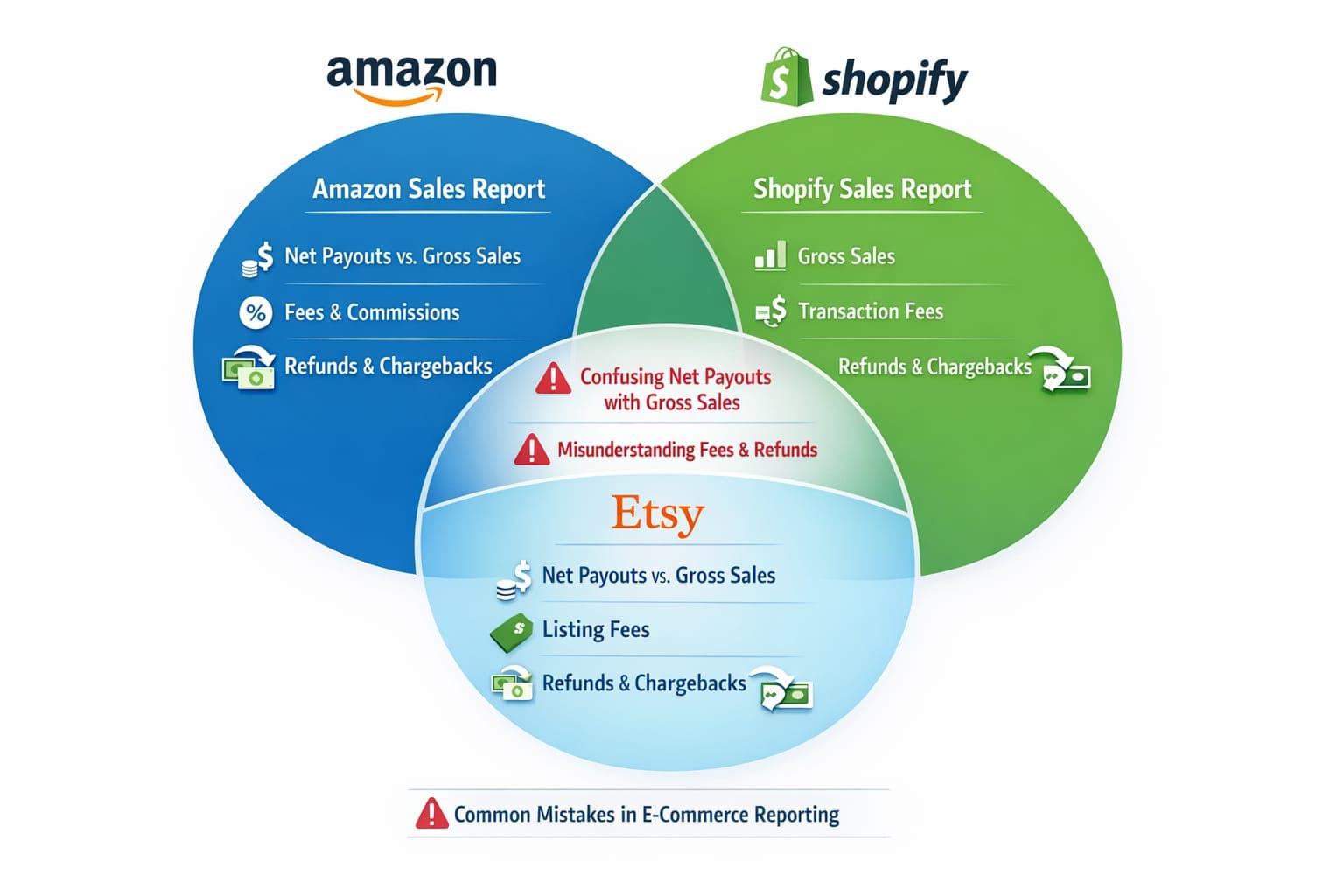
Amazon, Shopify, and Etsy all report data differently. Payouts arrive net of fees, refunds, and reserves. When sellers record only the deposit amount as revenue, gross sales are understated and expenses are overlooked.2. Inventory and COGS Errors
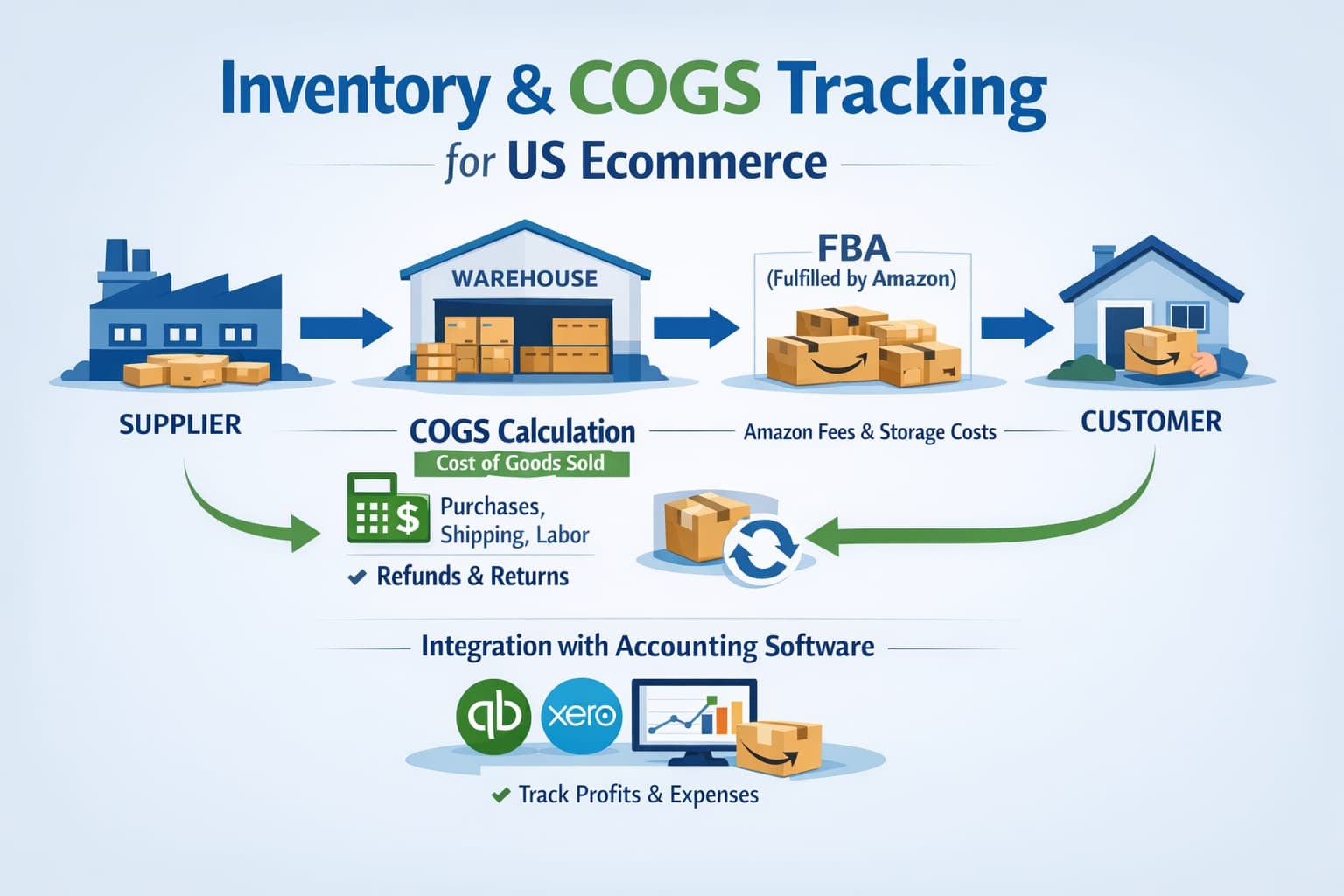
Inventory costs fluctuate due to shipping, supplier changes, damages, and returns. Without real-time syncing, many ecommerce businesses misstate Cost of Goods Sold (COGS), which explains why profits look good on paper but feel wrong in real life.3. Sales Tax Complexity Across States
Post-Wayfair, sales tax compliance is one of the biggest ecommerce bookkeeping headaches. Sellers must track economic and physical nexus, apply correct tax rates, and file on time.4. Manual Data Entry Mistakes
Manually entering thousands of transactions leads to duplicate entries, uncategorized expenses, and bloated miscellaneous accounts.5. Cash Flow Blind Spots
Delayed payouts, hidden fees, and poor forecasting hide real cash trends, leaving many sellers surprised by sudden cash shortages.6. Returns and Refund Tracking
High return rates complicate revenue recognition and inventory valuation, especially without automation.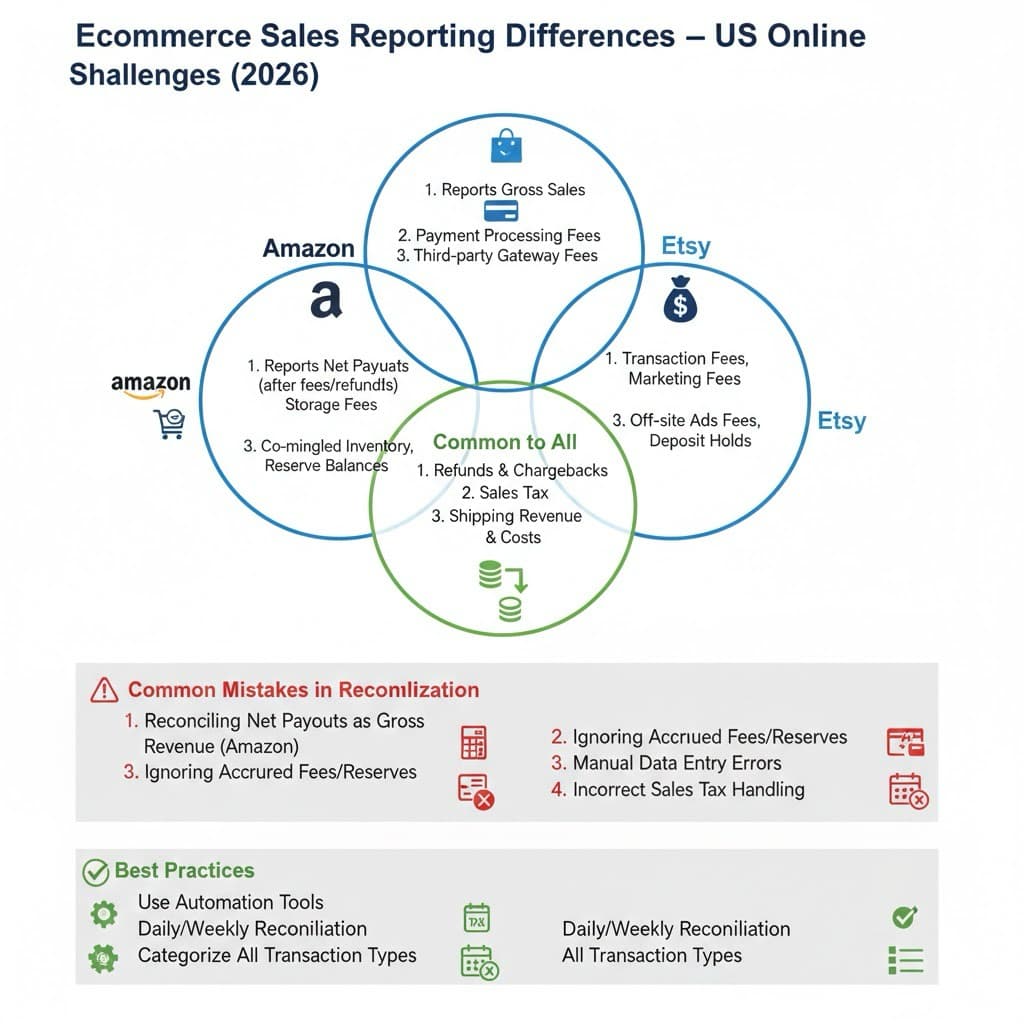
Core Accounting Software for Ecommerce Bookkeeping USA
In 2026, cloud-based accounting software forms the backbone of ecommerce bookkeeping in the USA. These platforms handle general ledger management, reporting, and compliance.- QuickBooks Online – The most popular option for US ecommerce businesses(official site)
- Xero – Known for collaboration and multi-currency support
- NetSuite – Ideal for high-volume and enterprise ecommerce brands
- Sage Intacct – Advanced reporting for mid-market companies
- Zoho Books – Budget-friendly option for growing sellers
Automation Tools for Ecommerce Bookkeeping USA in 2026
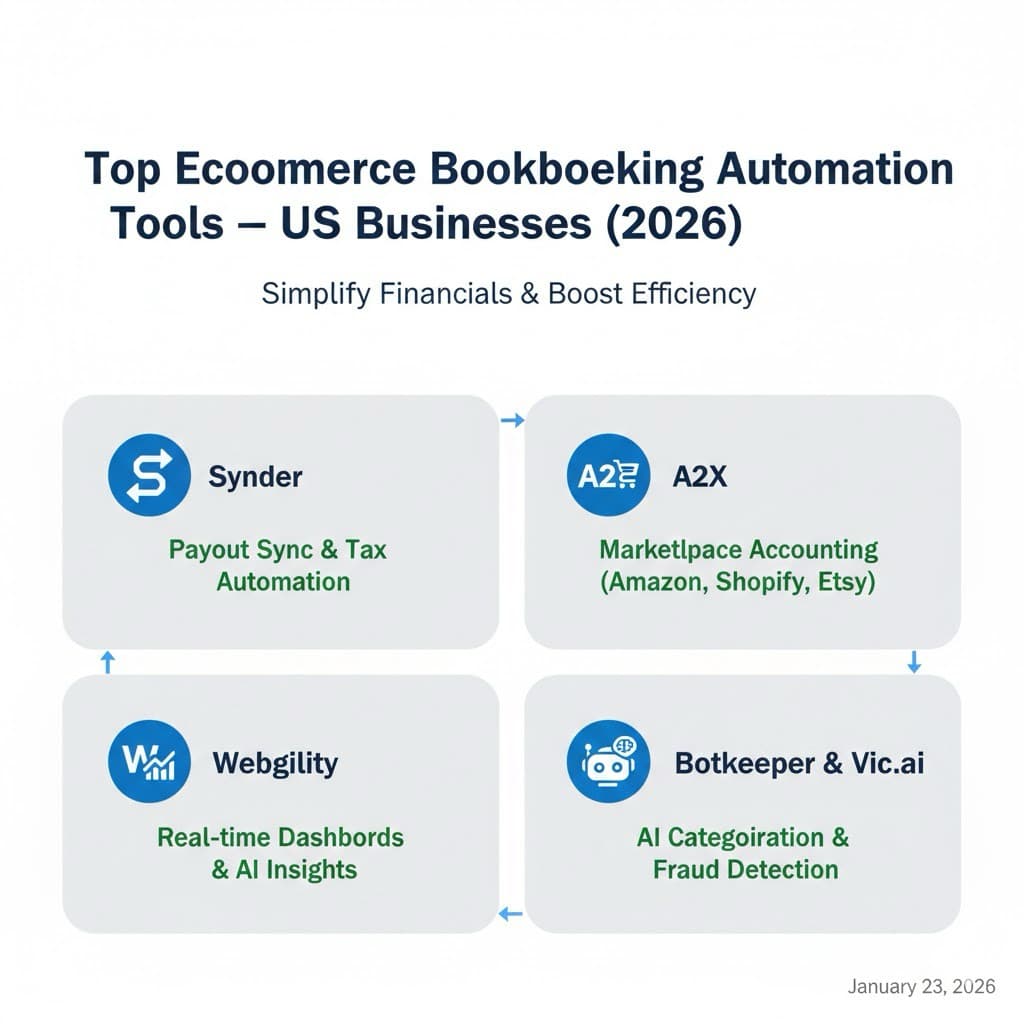
Automation tools bridge the gap between ecommerce platforms and accounting systems. They prevent cluttered ledgers and ensure accurate financial data.- Synder – Syncs sales, fees, refunds, and taxes automatically
- A2X – Specializes in marketplace accounting
- Webgility – Provides real-time syncing and AI insights