
Understanding Sales Tax Nexus and Compliance Requirements
(Understanding e-commerce sales tax nexus is essential for online sellers operating across multiple states.)
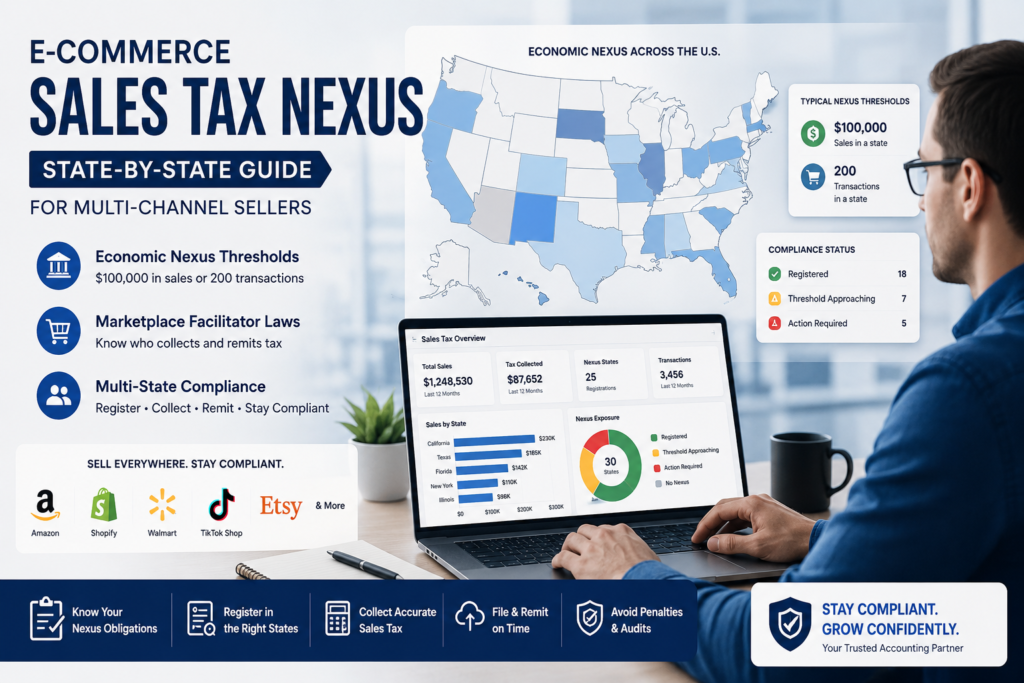
Did you know that a single 2018 Supreme Court ruling completely rewrote the rules for online business?The landmark South Dakota v. Wayfair, Inc. decision ended the era when physical presence was the primary requirement for collecting sales tax. Today, states can require online sellers to collect and remit tax based solely on their economic activity within a jurisdiction.This legal shift introduced the concept of economic nexus — a connection between a business and a state that creates a sales tax obligation. Instead of focusing on physical locations such as offices, warehouses, or storefronts, states now evaluate sales volume and transaction counts.Most states enforce economic nexus thresholds of approximately $100,000 in revenue or 200 individual transactions annually. Once these thresholds are exceeded, businesses must typically register, collect, and remit sales tax within that state.For ecommerce sellers operating across multiple marketplaces such as Amazon, Shopify, Walmart, Etsy, and TikTok Shop, understanding these requirements is essential for maintaining compliance and avoiding costly penalties.This guide explains how sales tax nexus works, how economic nexus thresholds apply to modern ecommerce businesses, and what multi-channel sellers must do to stay compliant across multiple states.
Key Takeaways
- The South Dakota v. Wayfair ruling shifted tax obligations from physical presence to economic activity.
- Economic nexus is commonly triggered by reaching specific revenue or transaction thresholds.
- Multi-channel sellers must monitor sales activity across every state where they generate revenue.
- Marketplace facilitator laws affect who is responsible for collecting and remitting sales tax.
- Understanding nexus requirements helps businesses avoid compliance issues, audits, and penalties.
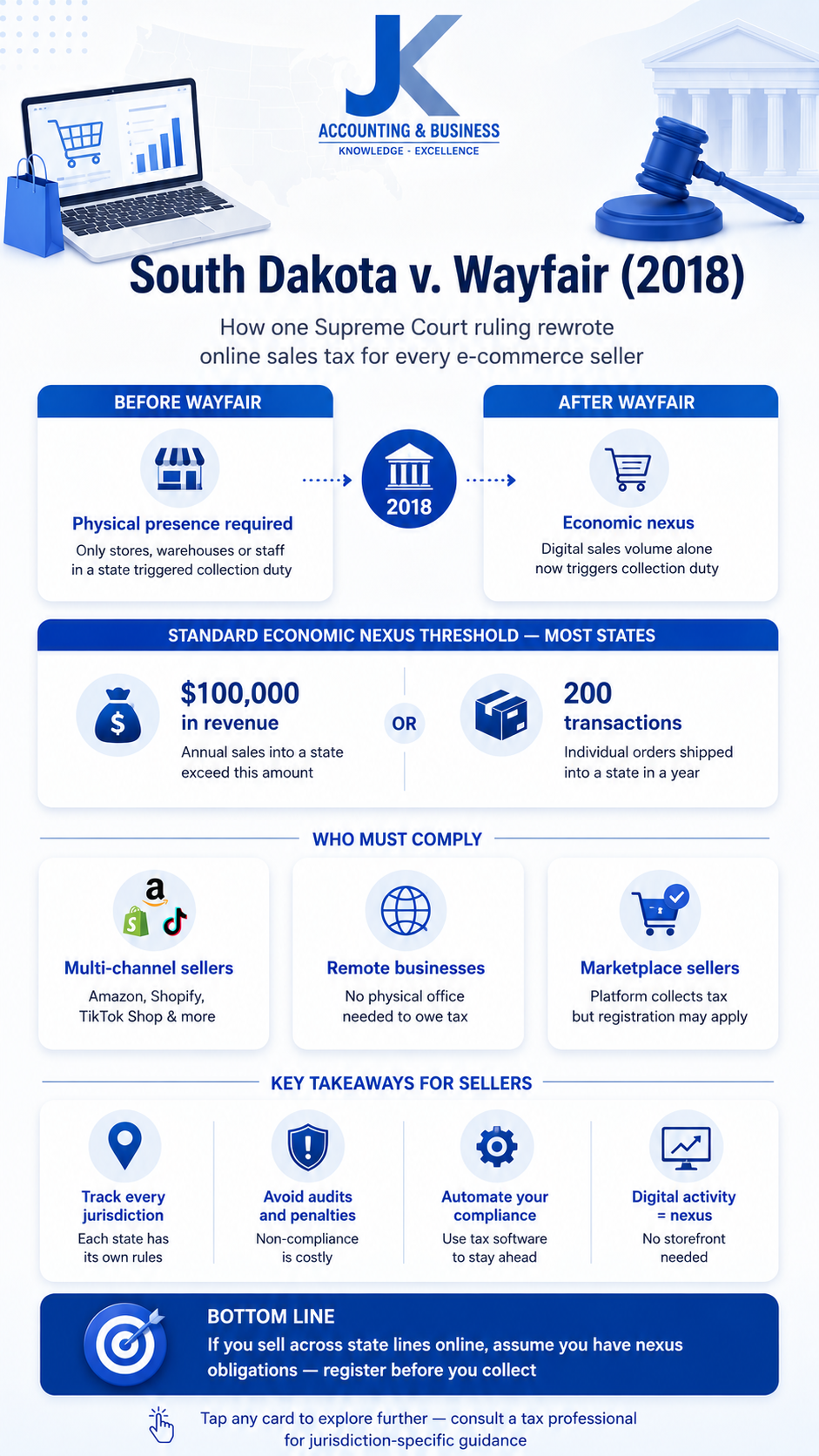
The South Dakota v. Wayfair decision transformed sales tax compliance by introducing economic nexus rules based on revenue and transaction thresholds rather than physical presence.
Understanding Sales Tax Nexus and Compliance Requirements
The paradigm shift from physical presence to digital accountability has fundamentally changed how ecommerce businesses approach tax compliance.Today, tax obligations extend far beyond warehouses, retail locations, and corporate offices. States increasingly evaluate a seller’s economic activity when determining whether sales tax collection requirements apply.For multi-channel sellers operating across Amazon, Shopify, Etsy, Walmart, TikTok Shop, and independent ecommerce websites, staying ahead of these evolving regulations is critical for maintaining compliance and avoiding costly penalties.Understanding the key nexus triggers that create tax obligations allows businesses to scale confidently while protecting themselves from unexpected audit risks and registration requirements.
Defining Economic Nexus and Thresholds
The rise of economic nexus has significantly transformed how states determine tax liability for online businesses.Unlike traditional tax rules that focused on physical presence, most states now establish nexus based on measurable business activity such as sales revenue or transaction volume.In many jurisdictions, a business creates an obligation to collect and remit sales tax once it exceeds $100,000 in gross sales or completes 200 individual transactions within a twelve-month period.Because economic nexus thresholds vary from state to state, ecommerce businesses must continuously monitor their sales performance across every market where they operate.Failure to recognize when a threshold has been reached can result in back taxes, penalties, and compliance issues that become increasingly difficult to resolve over time.
Marketplace Facilitator Laws and Seller Responsibilities
Marketplace facilitator laws have simplified tax collection for many ecommerce sellers.Platforms such as
Amazon
,
Etsy
,
Walmart Marketplace, and
TikTok Shop
often collect and remit sales tax automatically on behalf of sellers for transactions processed through their systems.While this reduces the administrative burden, it does not completely eliminate seller responsibilities.Businesses must still monitor marketplace sales, understand registration requirements, and maintain accurate records of transactions occurring across both marketplace and direct-to-consumer channels.For sellers operating independent
Shopify
or
WooCommerce
stores, tax collection obligations often remain fully their responsibility.Maintaining accurate reporting systems ensures compliance while reducing the risk of penalties during state audits.
Compliance Tip:Marketplace facilitator laws may collect sales tax on your behalf, but they do not always remove your responsibility to register, monitor thresholds, or file required state reports.
Emerging Complexities: Remote Employees and Digital Goods
The post-pandemic rise of distributed teams has introduced another important compliance challenge known as remote employee nexus.Hiring even a single employee or contractor in a new state can create a taxable presence, potentially triggering registration and reporting obligations regardless of sales volume.Many ecommerce businesses unknowingly create nexus by expanding remote teams without fully understanding the tax implications associated with employee location.Additionally, the taxation of digital goods and software products continues to evolve across the United States.Some states classify software subscriptions, downloadable products, e-books, online courses, and digital services as taxable transactions, while others apply different standards or exemptions.This creates additional complexity for SaaS companies, digital product creators, educators, and ecommerce businesses offering both physical and digital products.Understanding how remote employees and digital goods impact nexus obligations is essential for maintaining compliance as your business scales across multiple jurisdictions.
Common Nexus Triggers
- Exceeding state revenue thresholds.
- Reaching transaction count thresholds.
- Hiring remote employees in another state.
- Operating warehouses or fulfillment centers.
- Selling taxable digital products or software subscriptions.
- Participating in affiliate or referral programs.
“Many businesses monitor revenue thresholds closely but overlook remote employee nexus, creating unexpected compliance obligations long before they realize it.”
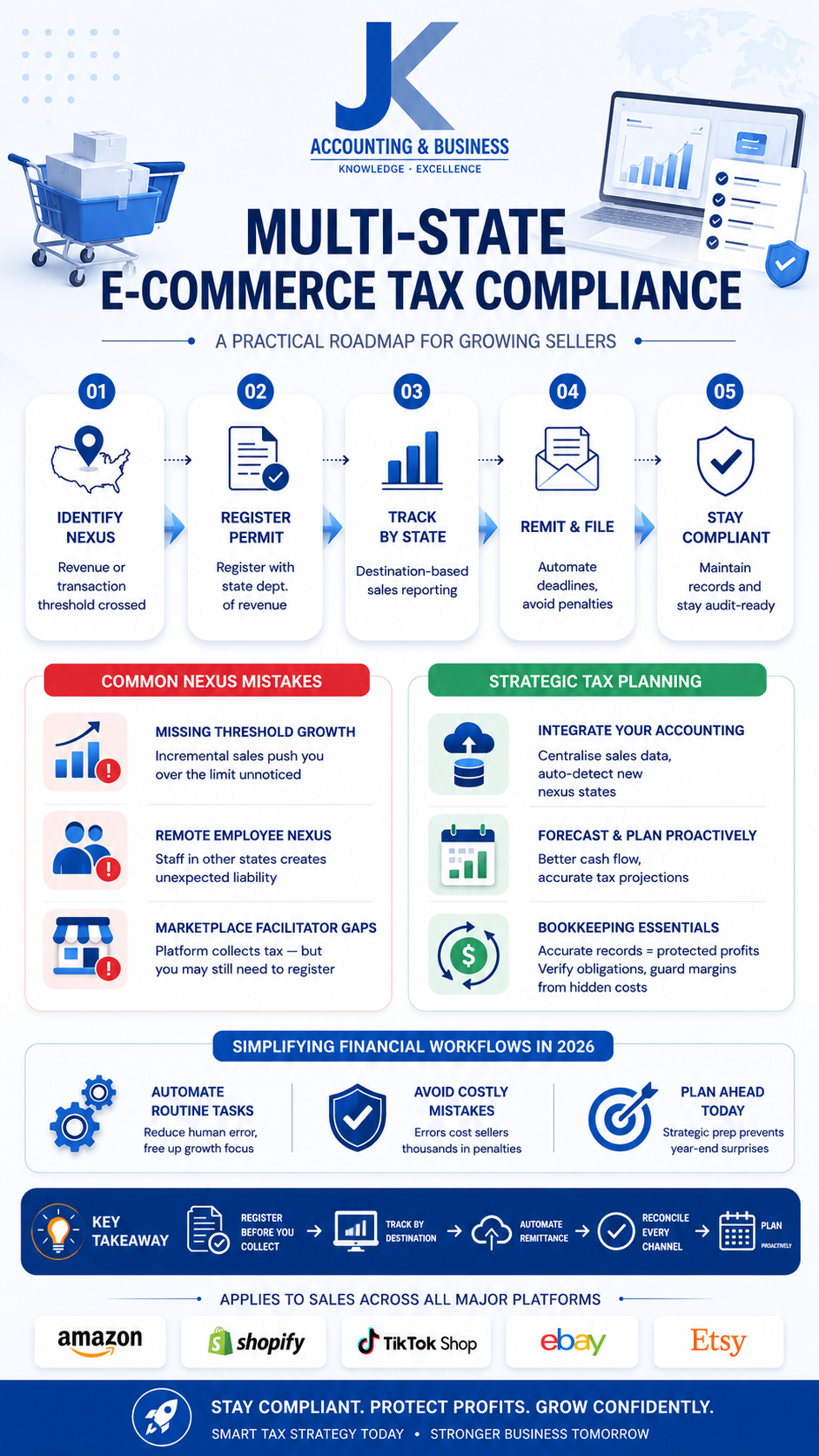
Multi-state ecommerce tax compliance requires monitoring nexus thresholds, understanding marketplace facilitator laws, and maintaining accurate financial reporting across multiple sales channels.
Emerging Complexities: Remote Employees and Digital Goods
The post-pandemic rise of distributed teams has introduced the challenge of the remote employee nexus. Hiring a single worker in a new state can inadvertently create a tax presence, forcing businesses to register and collect taxes in that jurisdiction.Companies must carefully evaluate their hiring practices to prevent these accidental nexus triggers and maintain compliance across multiple states.Further, the digital goods tax adds another layer of regulatory complexity. Many states now classify software subscriptions, e-books, online courses, downloadable content, and streaming services as taxable products.Understanding these evolving requirements is essential for ecommerce businesses, SaaS companies, and digital product sellers operating nationwide.We have summarized the most common nexus triggers below to help clarify these obligations.
| Nexus Type | Primary Trigger | Compliance Action |
|---|---|---|
| Economic Nexus | $100,000 Sales / 200 Transactions | Register and Collect |
| Physical Presence | Office, Warehouse, or Staff | Full Tax Registration |
| Remote Employee | Staff Residency | State-Specific Filing |
| Digital Goods | State-Specific Legislation | Product Taxability Review |
Compliance Tip:Many ecommerce businesses track revenue thresholds carefully but overlook remote employee nexus and digital product taxability rules. These hidden triggers can create unexpected registration and filing obligations.
Case Study: Navigating Multi-State Compliance and Tax Planning
Managing tax obligations across multiple states requires a clear, actionable roadmap for every growing ecommerce business.Many sellers struggle to bridge the gap between rapid revenue growth and increasingly complex e-commerce sales tax compliance requirements. As businesses expand into new jurisdictions, registration requirements, filing deadlines, and nexus thresholds become significantly more difficult to manage.By implementing a systematic compliance framework, ecommerce businesses can transform tax management from a reactive burden into a proactive growth strategy.
Mapping the Registration and Remittance Process
Obtaining a sales tax permit is the first critical step after identifying a nexus obligation.Once a business establishes nexus within a state, registration with the state’s department of revenue should occur before collecting sales tax from customers. Delayed registration can create compliance risks and potential penalty exposure.After registration, the focus shifts toward remittance and ongoing reporting requirements.Businesses must accurately track sales by destination state, monitor filing frequencies, and maintain complete transaction records to support future audits.Using automated reporting systems and integrated accounting workflows helps reduce manual effort while improving compliance accuracy.
Common Nexus Mistakes That Trigger Audits
One of the most common compliance mistakes is failing to monitor growth across economic nexus states.Many ecommerce businesses gradually exceed state-specific revenue or transaction thresholds without realizing they have triggered a registration requirement.Another overlooked risk involves remote employee nexus. Hiring employees or contractors in new jurisdictions can unintentionally create tax obligations even when sales thresholds have not been reached.Businesses also frequently misunderstand how marketplace facilitator laws apply to their operations. Although marketplaces often collect tax on behalf of sellers, registration and reporting obligations may still remain with the business.Remaining informed about these evolving regulations is essential for avoiding costly audits and compliance disputes.
Many state audits originate from unregistered nexus obligations rather than intentional tax avoidance.
Strategic Tax Planning and Accounting Integration
Integrating accounting software with ecommerce sales channels creates significantly greater visibility into tax obligations and business performance.Centralized reporting allows businesses to identify nexus triggers sooner, forecast future liabilities more accurately, and maintain stronger financial controls.This proactive approach improves cash flow planning while supporting long-term growth strategies across multiple jurisdictions.Businesses that combine compliance monitoring with strong bookkeeping systems are often better positioned to scale without creating operational bottlenecks.
Leveraging Modern Bookkeeping for Compliance
Accurate bookkeeping serves as the foundation for successful tax compliance.Without reliable financial records, businesses may struggle to verify sales activity, identify nexus thresholds, or maintain accurate tax filings.For a deeper understanding of how financial visibility protects ecommerce businesses, read our guide:
Why Bookkeeping Matters in E-commerce and How It Protects Your Profits
Consistent bookkeeping creates the clarity necessary to support compliance, profitability analysis, and sustainable business growth.
Fixing Reconciliation Gaps in Multi-Channel Sales
Reconciling deposits across multiple sales channels remains one of the most common challenges for ecommerce businesses.Differences between platform settlements and accounting records can create reporting inaccuracies that affect profitability analysis and tax compliance.Implementing structured reconciliation workflows helps ensure that every transaction, fee, refund, and adjustment is properly recorded.Learn more in our guide:
How to Fix Amazon, Shopify & TikTok Shop Deposits in QuickBooks Online
Simplifying Financial Workflows for 2026
As ecommerce businesses continue scaling, simplifying financial processes becomes increasingly important.Automation, integrated reporting systems, and standardized workflows help reduce manual errors while improving financial visibility.Businesses that proactively modernize their accounting operations often avoid the costly bookkeeping mistakes that impact profitability and long-term growth.Additional resources:
Growth Tip:Businesses that combine proactive tax planning, automated bookkeeping, and regular nexus reviews are significantly better positioned to scale across multiple states without compliance disruptions.
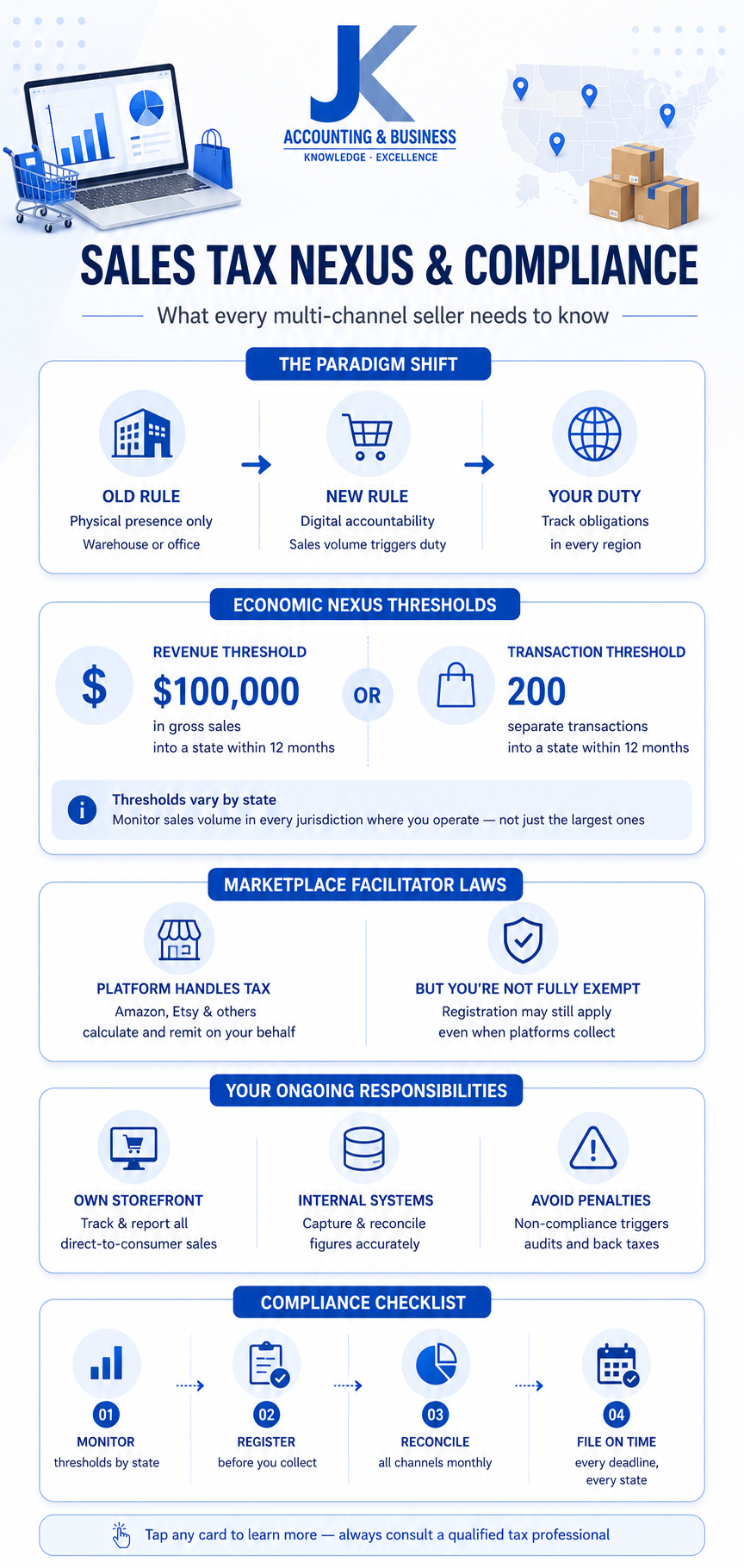
A practical roadmap for managing multi-state ecommerce tax compliance through registration, nexus monitoring, bookkeeping integration, and strategic tax planning.
Conclusion
Staying ahead of evolving state tax regulations is essential for protecting profitability, maintaining compliance, and supporting long-term ecommerce growth.The transition from reactive tax management to proactive financial oversight has become a competitive advantage for modern online businesses. As economic nexus rules continue to evolve, multi-channel sellers must actively monitor sales activity, registration requirements, and reporting obligations across every jurisdiction where they operate.Fortunately, modern compliance platforms such as
Avalara
and
TaxJar
have simplified the process by automating calculations, tracking nexus thresholds, and reducing the risk of costly filing errors.Businesses should regularly review their sales footprint, evaluate potential nexus triggers, and maintain a reliable audit trail that supports accurate reporting and regulatory compliance.As your ecommerce business expands into new markets, partnering with experienced bookkeeping and accounting professionals can help you navigate increasingly complex tax requirements while preserving operational efficiency.
Need Help Managing Multi-State Sales Tax Compliance?JK Cloud Ledger helps ecommerce businesses simplify bookkeeping, track nexus obligations, reconcile marketplace payouts, and maintain accurate financial reporting across multiple sales channels.
Contact our team today
to build a scalable compliance and bookkeeping system that supports your long-term growth.